
Living Cells Engineered to Seek and Destroy Cancer

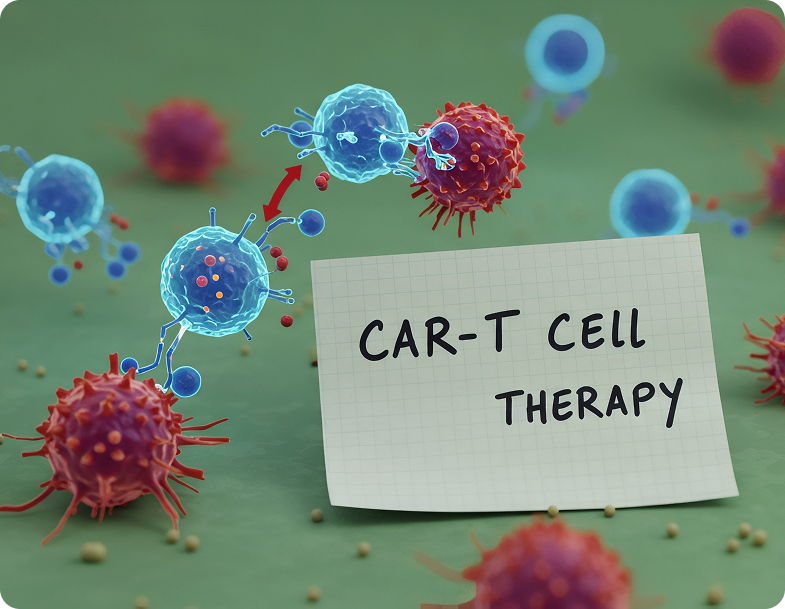
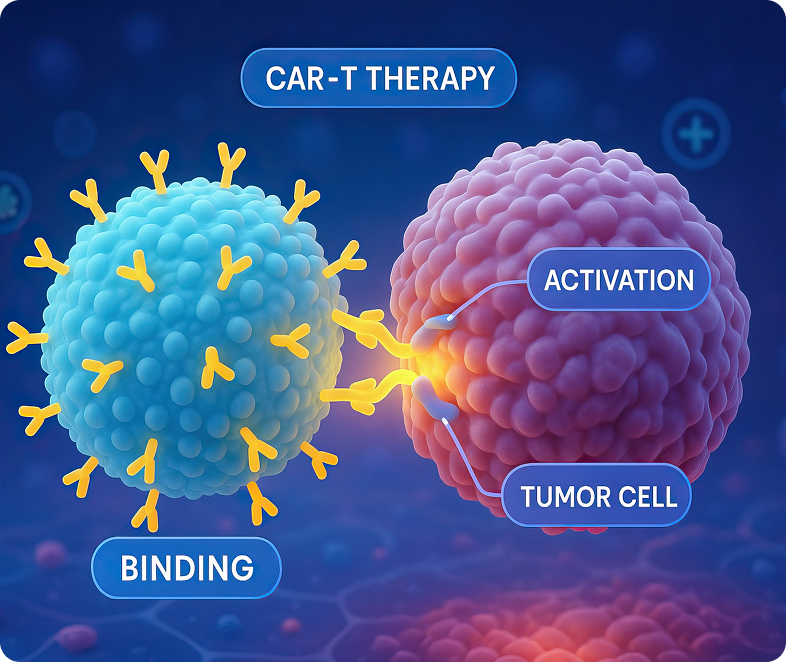
Chimeric Antigen Receptor T-cell (CAR-T) therapy is a form of adoptive cell immunotherapy that re-engineers a patient's own immune cells to recognise and eliminate specific cancer antigens with extraordinary molecular precision.

Unlike conventional chemotherapy or targeted agents, CAR-T cells persist in the body as “living medicine” — capable of long-term immune surveillance and re-expansion upon antigen re-encounter, offering the prospect of durable, potentially curative remission in patients with otherwise refractory haematological disease.

Image

FDA-Approved indications

Overall response in trials

Days to manufacture

Patients treated globally

How CAR-T Therapy Works

1

Leukapheresis

T-Cell Collection

A patient's T-cells are harvested via a specialised apheresis procedure, separating lymphocytes from whole blood over 3–5 hours at an accredited collection centre.

2

Genetic Engineering

CAR Construct Insertion

In a certified GMP manufacturing facility, a chimeric antigen receptor (CAR) gene is introduced into T-cells via viral vector transduction and cells are expanded over 10–14 days.

3

Lymphodepletion

Patient Conditioning

A short preparatory course of chemotherapy (fludarabine and cyclophosphamide) clears space in the immune landscape to allow engineered CAR-T cells to expand effectively.

4

Infusion & Monitoring

Living Medicine

Expanded CAR-T cells are infused and patients are monitored for 28 days. Response is assessed by PET-CT at Day 30 and Day 90. Cells persist as memory T-cells long-term.

How CAR-T Therapy Works

Image

Overall Survival at 3 Years

Axi-cel ZUMA-1 trial — DLBCL patients, N=101

Overall Response Rate

Axi-cel ZUMA-1 trial — DLBCL patients, N=101

Single Infusion Required

No maintenance therapy needed following confirmed response

Treatment-Related Mortality

Grade 4+ CRS events in optimised JACIE-accredited centres

Advantages Over Standard Salvage Therapy

Durable Remission

Engineered cells persist as memory T-cells, providing ongoing immune surveillance beyond initial response

Durable Remission

Engineered cells persist as memory T-cells, providing ongoing immune surveillance beyond initial response

Durable Remission

Engineered cells persist as memory T-cells, providing ongoing immune surveillance beyond initial response

Are you eligible for CAR-T therapy?

Current approvals cover several haematological malignancies. Eligibility is determined through a comprehensive specialist assessment.

Image

Relapsed / Refractory B-cell ALL

Adults and paediatric patients with B-cell acute lymphoblastic leukaemia who have relapsed or not responded to prior therapy.
Image

Diffuse Large B-Cell Lymphoma (DLBCL)

Patients with refractory DLBCL or relapse after ≥2 lines of systemic therapy, including transformed follicular lymphoma.
Image

Follicular Lymphoma (Grade 3B)

Patients who have relapsed after two or more lines of therapy and have no curative alternative.
Image

Relapsed Multiple Myeloma

Patients with multiple myeloma following ≥4 prior lines of therapy, including a proteasome inhibitor and immunomodulatory agent.
Image

Mantle Cell Lymphoma (MCL)

Adult patients with relapsed or refractory MCL following at least two prior lines, including BTK inhibitor therapy.
Image

Conditions We Treat

ALL

Acute Lymphoblastic Leukaemia

Paediatric & adult R/R

DLBCL

Diffuse Large B-Cell Lymphoma

3L+ relapsed/refractory

MM

Multiple Myeloma

Quadruple-refractory

FL

Follicular Lymphoma

Grade 1–3a, 3L+

MCL

Mantle Cell Lymphoma

Post-BTKi failure

LBCL

Large B-Cell Lymphoma

Primary mediastinal

Patient Impact Stories

Loading items...

Book a Day Care Session

Our experienced medical staff is ready to provide you with the highest quality care. Book your appointment today or call us for immediate assistance.